
'Modi is a symbol of Asia Rising; and, for the first time in decades, a non-white has the potential to be the most compelling global leader.'

'In the past the US has been reluctant to name Pakistan directly in an US-India joint statement.'

The joint statement issued after Prime Minister Narendra Modi and President Barack Obama's first-ever summit is high on intent and ambition. Notably missing from the statement is India's refusal to be America's partner in its war against ISIS.

Moving ahead with their new mantra -- Chalein Saath Saath: Forward Together We Go -- Prime Minister Narendra Modi and United States President Barack Obama on Tuesday vowed to deepen cooperation in every sector for the benefit of global stability and people's livelihoods over the next ten years.

'We use the word "historic" perhaps too much, but the prime minister's visit certainly was historic in so many ways.'

'Pluralism is a fundamental fact of Indian life,' Colonel Anil A Athale (retd) tells members of the US Congress. 'Indians created a secular/plural State because that is what the majority believes in and not the other way round.'

Here's your weekly digest of the craziest stories from around the world.

New Delhi and Beijing are the only two regional capitals that have commented on US President Donald Trump's speech on August 21 outlining the way forward in Afghanistan. The Indian foreign ministry statement was effusive in praise, while the Chinese statement has been one of cautious and guarded hope. Delhi has identified itself with Trump's Afghan strategy, whereas the Chinese stance is calibrated -- observant and objective, keeping a distance, says Ambassador M K Bhadrakumar.

Praising the US for turning barriers into bridges of partnership, he said that America had stood with India when the support was needed the most, like when terrorists attacked Mumbai in November 2008 and in other economic endeavours as well
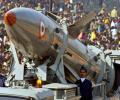
It is time the new government, unencumbered with the burden of past, initiates a wide ranging review and open debate on the security issues to rectify our short term and long term shortcomings. It has taken some wise steps but has to go beyond this to identify the structural weakness and create systems, says Colonel (retd) Anil Athale.

The President was apparently unaware of the Narendra Modi visa ban controversy till April. Aziz Haniffa/Rediff.com has the scoop.

The IPCC has blamed man-made emissions for warming of the globe and long term climate change. Limiting climate change, therefore, will require substantial and sustained reduction of greenhouse gas emissions. This is the message to politicians and policy makers of the world, says Dinesh C Sharma

The Security Council as it is today is unable to bring peace and security in the world and so there is reason for countries like India to become members of the Council, Ambassador Asoke Kumar Mukerji tells Sheela Bhatt/Rediff.com.

Narendra Modi's promise to allow states a bigger say in strategising and building foreign policy is unexceptionable, says TP Sreenivasan.

Excerpts from Prime Minister Narendra Modi's speech at the Combined Commanders Conference on board the INS Vikramaditya at sea, off the coast of Kochi.

With EU, it is part of the FTA that we will need to negotiate.

This is the joint statement issued by the ministry of external affairs on the visit of US President Barack Obama to India.

Sanjay Mathur, managing director and head of economics research for Asia Pacific (ex-Japan), Royal Bank of Scotland, tells Business Standard that in the emerging market pack, India needs to learn lessons from Korea and Taiwan, which have managed their economic situations well.

A look at the life and times of maverick businessman Chinnakannan Sivasankaran

'Modi's investment in the relationship with Washington is the biggest deliverable of this visit. He means business and that's fantastic!'
